Thursday, April 22, 2010

Reflection.

I thought of doing about icebergs because I thought it was an interesting, informative and easy topic at the same time. It is also going to be a challenge for me to go out there and research about it because i have not done about icebergs before in my life.

It was nice to learn new facts about icebergs and how they are me and why they are dangerous for ships, boats e.t.c. I wrote a summary of icebergs and posted it in a blog. I hope that my blog has work that is easy to understand and that many people benefit from it.

I really like what I did because what I did is from me and my heart. :P
Icebergs!


Icebergs are pieces of ice that formed on land and float in an ocean or lake. Icebergs come in all shapes and sizes, from ice-cube-sized chunks to ice islands the size of a small country. Icebergs are very dangerous to ships, and many ships have sunk after crashing into icebergs. The most famous one was RMS Titanic in 1912 The North Atlantic and the cold waters surrounding Antarctica are home to most of the icebergs on Earth.


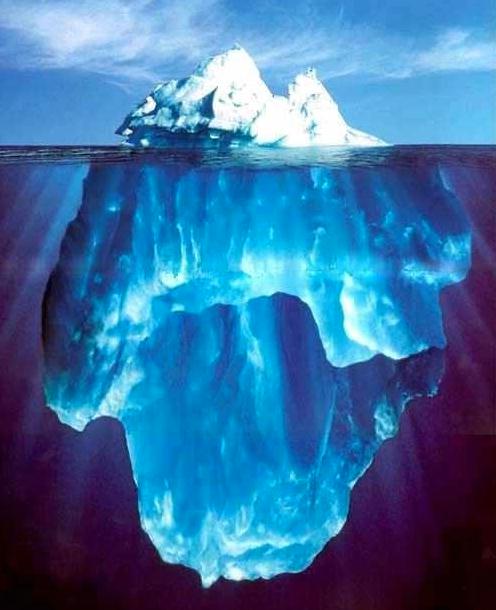
About 90% of an iceberg is below the water line and ten percent above. Just by looking at the part you can see, it is hard to tell how the part underwater looks, and how close you can get before crashing into it. Icebergs are dangerous for ships, especially during the months of April, May, and June.

Icebergs break off from larger structures made of ice, like glaciers or ice shelves. These are formed by snowfall in very cold places where it won't melt in the summer. The snow builds up and compacts into ice. This is gradually pulled downhill by gravity and into the sea. The ice then falls off and makes icebergs. The icebergs can drift in the sea for years before they have melted completely.


The biggest iceberg people know about was called B-15. It broke off from the Antarctic ice shelf in the year 2000, and was as large as the island of Jamaica (over 10,000km2). It soon started to break up into smaller pieces, some of which still remain in 2008.

The weight of an iceberg can be up to several million tons.

When iceberg ice melts quickly, the bubbles released from it make a sound like soda water fizzing.


As icebergs travel southwards they experience significant reductions in size and shape. By the time they reach Newfoundland waters they have lost about 85% of their original mass.


It can take icebergs up to three years to reach the coast of Newfoundland.


The interior temperature of an iceberg is between -15 and -20 degrees Celsius.


Icebergs are really white. This color is created by white light reflecting off tiny air bubbles trapped in the ice. There are also some antiseptic-blue overtones to it and a whole spectrum of green where the iceberg descends into the ocean.


Bibliography:


  • http://simple.wikipedia.org/wiki/Iceberg

  • http://www.bergwater.ca/berg-news/iceberg-facts.aspx

  • http://sciencebhakta.files.wordpress.com/2007/12/iceberg.jpg

  • http://outdoorphotographermag.com/uploadpics/75584_Icebergs.jpg

  • http://ask.yahoo.com/20010425.html

  • http://drake.marin.k12.ca.us/academics/rock/Icebergs_files/Iceberg.jpg


  • Thursday, April 8, 2010

    My Reflection

    Today I learnt a lot about Web 02 in class. At first I had to find out what Web 02 is and what the advantages of it are. I found out that Web 02 is Web 2.0 is what people call new ways of showing or using things on the Internet. And, the advantages are:
    Web 2.0 is simple: easy for anyone to publish their work on the Internet
    Web 2.0 is social: easy for people to connect with other people
    Web 2.0 is open: easy for websites and computer programs to exchange data with other sources


    Then I did a quiz on http://www.teach-ict.com/gcse/hardware/networks/miniweb/quiz.htm to see how much I know about networks. I didn’t do quite well. Then, I had to find out and know about LANs, WANs and the advantages and disadvantages of computer networksTopologies/Types of networks
    I found out that LAN stands for: Local Area Network. And, a LAN covers a small area such as one site or building, e.g. a school or a college. WAN stands for: Wide Area Network. And, a WAN covers a large geographical area. Most WANs are made from several LANs connected together.

    I also had to find out the advantages and disadvantages of networks. The advantages of networks are:
    Save money on software and other programs
    Fast
    Allows you to share files easily
    Lets you mark projects on the computer


    And the disadvantages are:
    Expensive to set up
    All the wires can get in the way
    If something goes wrong, the whole network could go down with it
    Lower security
    So basically, I learnt a lot in this lesson.

    Bibliography:

    · http://www.angelfire.com/psy/computernetworks/ad.html
    · http://www.bbc.co.uk/schools/gcsebitesize/ict/datacomm/2networksrev1.shtml
    · http://www.teach-ict.com/gcse/hardware/networks/miniweb/index.htm
    · http://simple.wikipedia.org/wiki/Web_2.0

    Friday, March 26, 2010

    WEB 2.0
    Web 0.2 is basically a site that allows interaction between users. This site enables users to exchange information with each other anytime they want, connect with each other, publish anything they want on the internet e.t.c.

    Some examples of Web 0.2 are:
    • Video sharing sites
    • Wikis
    • Blogs
    • Social network and sites
    • Chat sites

    Advantages of Web 0.2:

    • Its open to anybody.
    • It helps connect with other users in a faster way.
    • Helps let people connect and interact with each other from all over the world.
    • Its easy for some one to use.
    • It adds great interactivity between differents users.

    Bibliography:

    http://www.angelfire.com/psy/computernetworks/ad.html· http://www.bbc.co.uk/schools/gcsebitesize/ict/datacomm/2networksrev1.shtml· http://www.teach-ict.com/gcse/hardware/networks/miniweb/index.htm· http://simple.wikipedia.org/wiki/Web_2.0